
Guide
What is mycelium packaging, and which products does it suit
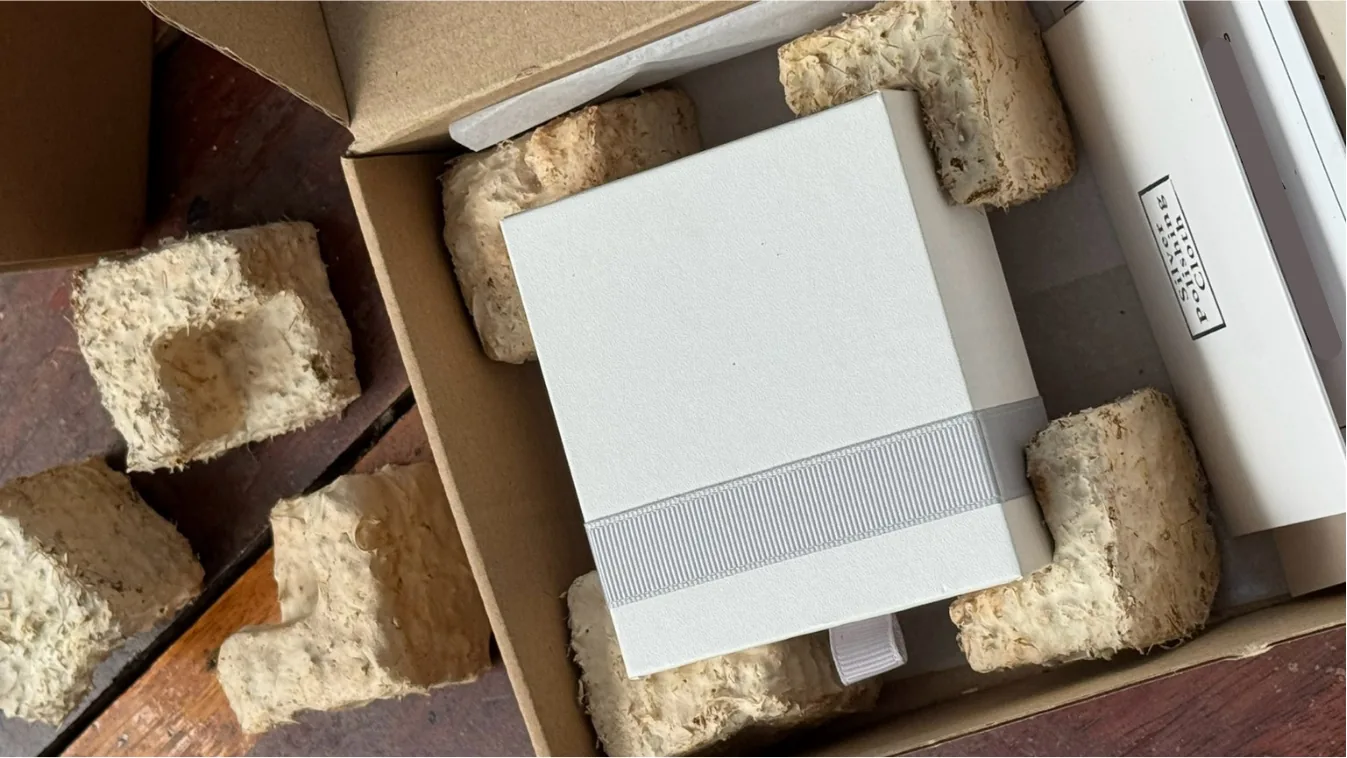
Mycelium packaging, often called mushroom packaging, is made by cultivating mushrooms on agricultural residues inside a mold until the threads bind everything into the shape you need.
- Raw material
- Agricultural residues from Thailand
- Forming
- Grown in a mold shaped to the product
- Material
- Entirely biomass
How it is made
- Prepare the substrate. Agricultural residues from Thailand.
- Inoculate. Mix in mushroom spawn and pack it into a mold designed around the product.
- Let it grow. Mycelium spreads through the residues and binds them together.
- Heat-treat. To stop growth, then the piece is ready to use.
Illustrations by Thereon
Because the threads do the binding, the material itself is entirely biomass. For the biology, see what is mycelium.
What makes it special
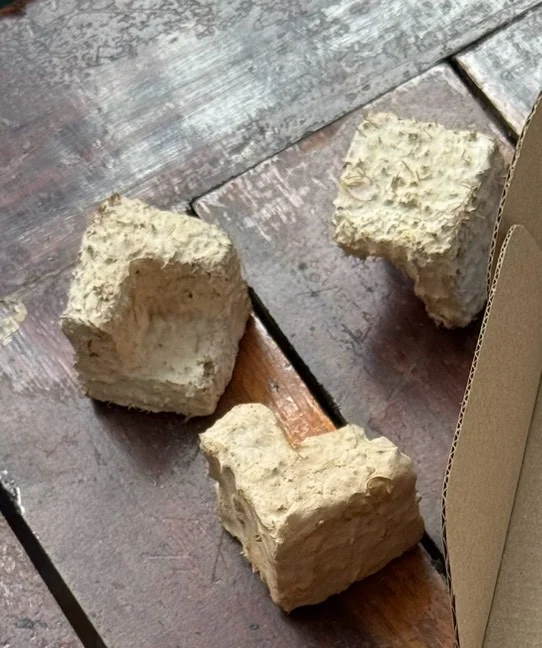
- A matte surface with natural fibre patterns, no two pieces alike
- Molded to fit the product exactly, for stability and protection
- A story built in: an insert grown from nature
Before you choose it
- It needs time to grow. Lead times are longer than foam, so plan ahead.
- Each piece differs slightly. Pattern, colour and surface vary.
- Cost per piece is usually higher than mass-produced foam.
What pricing depends on
Mainly the weight of the piece, the complexity of the shape, whether a new mold is needed, and quantity. Our pricing is based mostly on weight and shape.
Thereon's material
We grow mycelium cushioning in Thailand, using raw material from farmers. Instead of being burned or sent to landfill, it becomes mycelium.
See the real thing before you decide
Send your product photos and size. We will mold a sample to your product for free.
Get a free sampleFAQ
Frequently asked questions
Is mycelium packaging the same as mushroom packaging?
Yes. People often call it mushroom packaging, but the part used is mycelium (the root network of fungi), not the mushroom itself. That is why we call it mycelium cushioning.
Does it grow mould or smell?
After growing, we heat-treat the material to stop growth. Like any biomass material it can grow mould if stored somewhere very damp, so keep it dry and well ventilated.
How long does production take?
Longer than foam, because the mycelium has to grow to fill the mold first. Timing depends on shape and thickness. We give a clear delivery date once we see your product.
Is it more expensive than foam?
Per piece it is usually more expensive than mass-produced EPS foam. Our pricing is based on the weight and shape of the insert. Send your product size and we will give you an estimate.